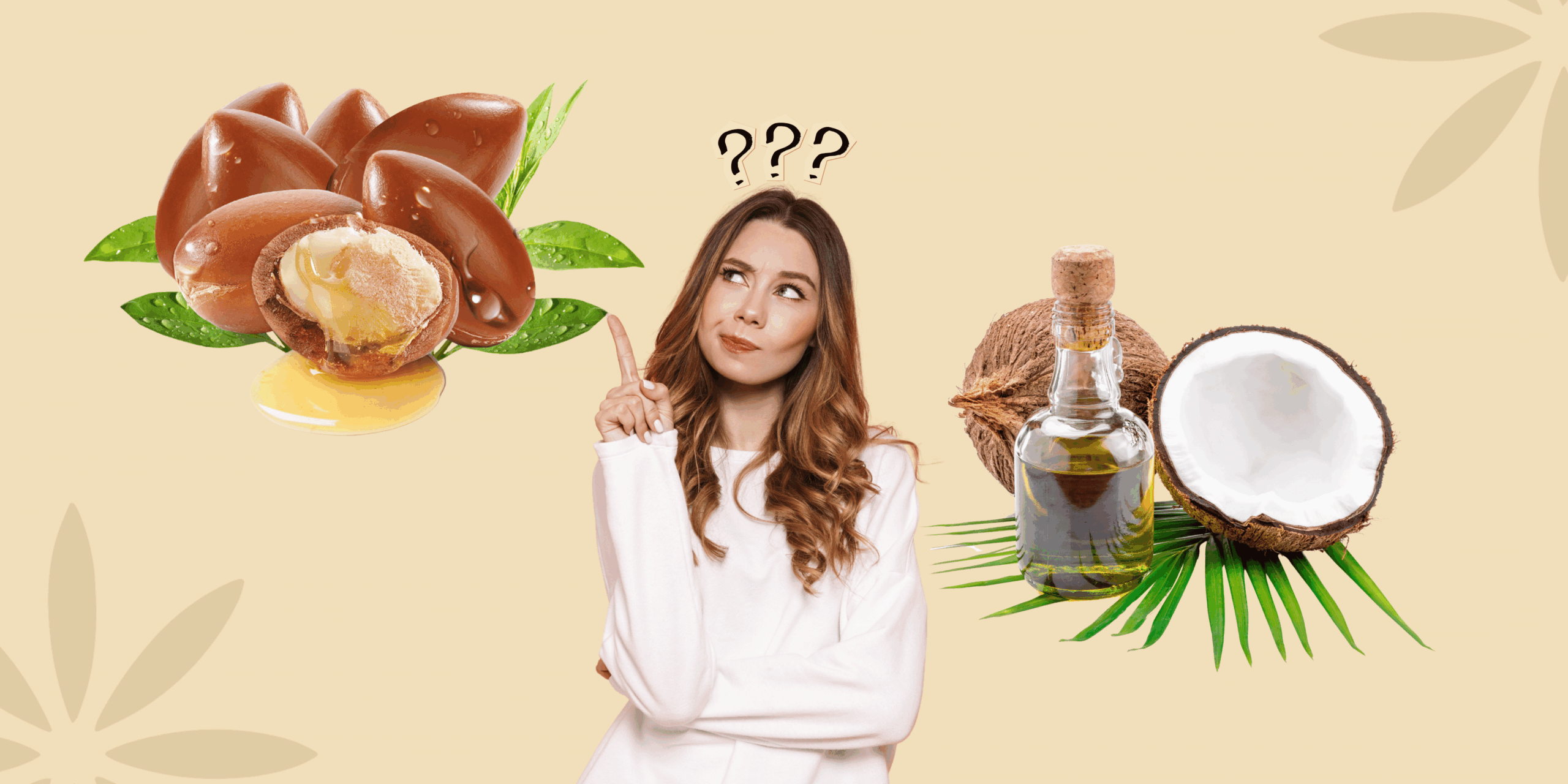
Both have earned their place in the beauty world. Coconut oil, with its creamy texture and tropical familiarity. Argan oil, liquid gold pressed from the heart of Morocco’s ancient argan forests. But when it comes to genuine, lasting results [for hair, skin, and nails] the two are not equals.
Here is what the difference actually looks like. Argan oil vs Coconut oil:
The Composition: Where It All Begins
Coconut oil is rich in lauric acid, a saturated fatty acid that gives it its solid consistency at room temperature. It penetrates the hair shaft reasonably well but sits heavily on the skin, often occluding pores and leaving a greasy residue that few skin types can comfortably absorb.
Argan oil is a different composition entirely. Cold-pressed from the kernels of the Argania Spinosa tree, found only in the Souss region of Morocco, it is exceptional in unsaturated fatty acids (oleic and linoleic acids), paired with a rare concentration of vitamin E tocotrienols and natural polyphenols. The result is a dry oil: weightless, fast-absorbing, and deeply nourishing without heaviness.
For Hair: Penetration vs. Coating
Coconut oil’s molecular structure allows it to enter the hair cortex, which can reduce protein loss during washing. However, for those with fine, low-porosity, or protein-sensitive hair, this same quality can cause stiffness and buildup over time.
Argan oil works differently. It does not force entry, it envelops the hair shaft, sealing the cuticle and restoring elasticity. The result is frizz reduction, improved shine, and significantly softer texture, without the heaviness that coconut oil can leave behind. It suits every hair type, including colour-treated and chemically processed hair, precisely because it nourishes without overloading.
For Skin: Absorption Is Everything
Coconut oil’s comedogenic rating, the measure of how likely an ingredient is to clog pores, sits between 3 and 4 out of 5. For oily, combination, or acne-prone skin, this is a meaningful concern.
Argan oil has a comedogenic rating of 0. It absorbs completely, leaving no residue, and its anti-inflammatory properties make it suitable even for sensitive skin. Rich in squalene, it mirrors the skin’s own lipid profile, which is precisely why it integrates so naturally, rather than sitting on the surface.
The Verdict
Coconut oil has its place, as a deep-conditioning mask for very coarse, high-porosity hair, or as a body moisturiser for those who tolerate it well. But as a daily-use oil for face, hair, and nails, it is too heavy, too occlusive, and too unpredictable across skin types.
Argan oil offers what coconut oil cannot: versatility without compromise. One oil, adapted to every need, from a single drop smoothed through damp hair to a nightly treatment pressed gently into the skin around the eyes and nails.
As a result, when you see “Argan oil vs Coconut oil” for cosmetics, Argan oil wins.
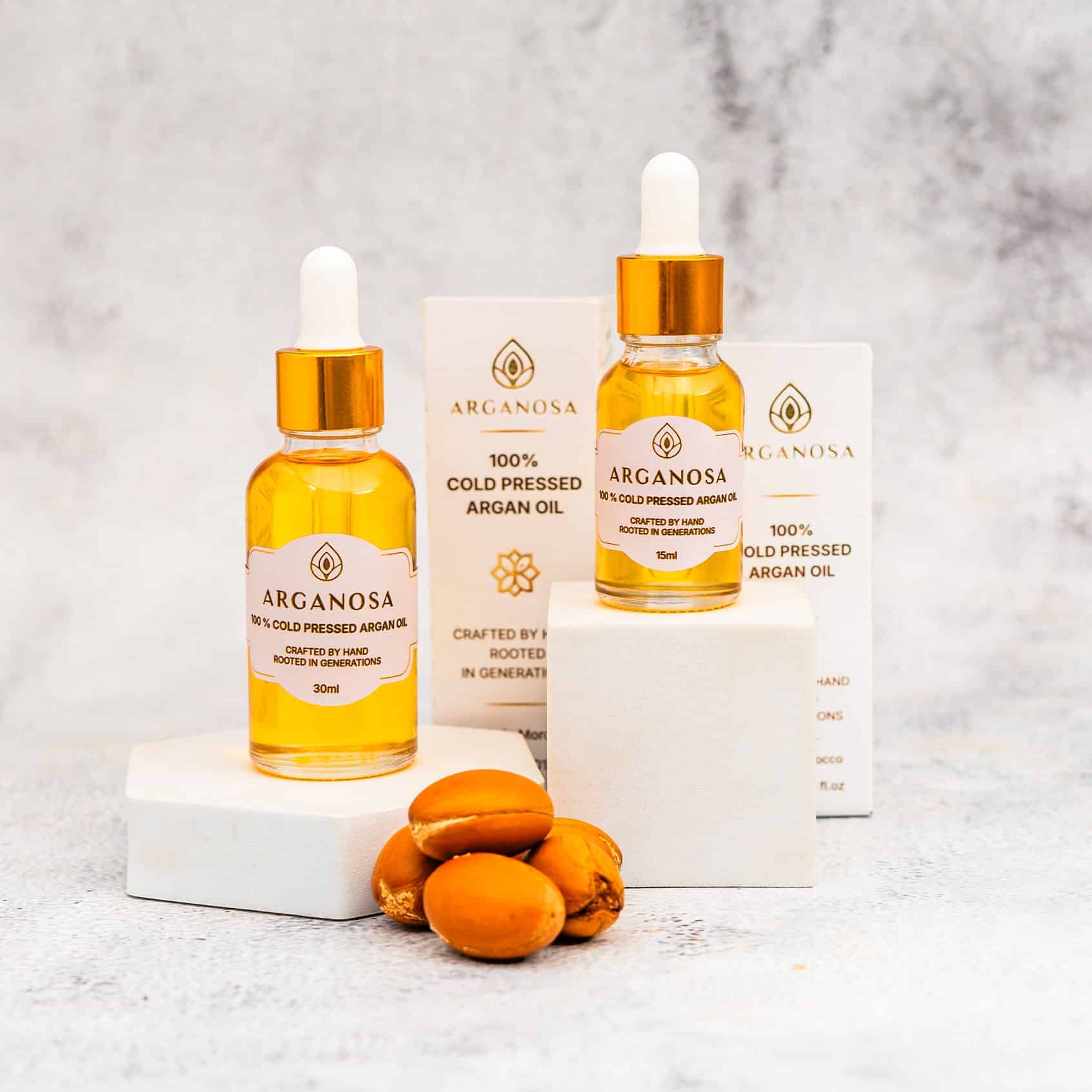
That is the standard Arganosa was built on. Cold-pressed, ECOCERT certified, handcrafted by the women of Agadir. Nothing more. Nothing less.